December 17, 2015

Buyers want the best in rare coins and fine art: The Investment Column

Coinworld271v47415e

The rare coin market is often compared to the art market, and the comparison is useful in some limited regards. Both markets are somewhat thinly capitalized when compared to other asset classes, both deal with often unique objects that generally have clear comparables in terms of quality, desirability and rarity, and there are relatively high transaction costs when buying or selling.

More often than not, most expensive U.S. coins go to U.S. buyers, while the art market is more global in its scope.

Take the 1917–18 Reclining Nude painting by Italian artist Amedeo Modigliani that sold at Christie’s on Nov. 9 for $170.4 million. The picture went to a Chinese buyer who plans to display it in his private museum in Shanghai. The work had been off the market for 60 years and seven bidders remained at the $100 million level, showing the massive appetite for masterpieces that are not easily found.

The nearly $500 million auction, titled “The Artist’s Muse,” combined the Impressionist and Modern and Contemporary categories and offered 34 carefully selected works. Of the 34 works, 24 sold, showing that the art market is strong at the top, but that buyers remain selective.

The same can be said for the rare coin market.

Attending the previews of the huge sales held in early November in New York by Christie’s and its primary competitor Sotheby’s reminded me of the huge volume of works of art of varying quality that trade hands. Not everything is a masterpiece.

The major sales by the two firms in the spring and autumn in New York now routinely collectively realize more than $2 billion each season.

Some pieces offered — like the Modigliani — jumped off the wall and had a presence. These pieces are considered trophies.

Others were hampered by too optimistic expectations from their owners and the auction houses, did not meet their reserves, and went unsold. Or, they were expensive, but easily replaceable, had been lingering on the market and lacked freshness, or were not characteristic of the artist or from the artist’s prime period.

But perhaps the strongest link to the rare coin market, and one that’s seen in nearly all collectible markets, was that quality ruled. The top works were exceptional in condition, rarity and provenance and the market rewarded these, as long as they were accompanied by a reasonable estimate, with record prices.

The same can be seen in the rare coin market today, where high quality rarities, such as those in the D. Brent Pogue Collection, perform strongly while other coins seem to return to the auction block multiple times before finally finding a buyer at a bargain price.

http://www.coinworld.com/news/us-coins/2015/11/buyers-want-the-best-in-rare-coins-and-fine-art.html#

December 16, 2015

1916 – 100 Year Anniversary!


100 Year Anniversary!

While Paris was being bombed for the first time by German Zeppelins and Woodrow Wilson was President, three gold denomination of coins were minted in 1916; the $5.00, $10.00 & $20.00. San Francisco was the only mint that produced gold coins that year.

The 100th anniversary of this historically significant year in World History is upon us. Centennial coins often do well near their 100th anniversary. For example, the 1892 Columbian ½ dollar went up over 1000% near its 100th anniversary.
Centennial Coins perform well no matter the trends of the market. Over the past few years these have become increasingly difficult to obtain.

1916-S $20 Saint Gaudens

243078-010o_t243078-010r_t

Mint: San Francisco, Mintage: 796,000, Composition: Gold, Fineness: 0.9000, Weight: 33.4360g, AGW: 0.9675oz, Diameter: 34mm

The 1916-S seems to have been minted to a very high standard of quality. The strike is almost always very sharp and the surfaces, although they occasionally show signs of very fine granularity, do not have the metal flow problems encountered on many examples of the 1915-S. Luster is always very good to excellent and the color is usually a very appealing rich greenish gold, sometimes with a light orange or coppery tint. High-grade examples of this issue invariably have great “eye appeal.”

1916-S $10.00 Indian

27399406_36747877_450
Mint: San Francisco, Mintage: 138,500, Composition: Gold, Fineness: 0.9000, Weight: 16.7180g, AGW: 0.4837oz, Diameter: 27mm

This date and mint was well represented in the European banks and examples continue to be found there. Most seen however are at the lower end of the Mint State range with Choice and Gem examples quite scarce. The date is usually found well struck with subdued luster. The Smithsonian collection contains two Superb Gem examples, one of which would easily grade MS 67. The Norweb coin appears to be the finest example in private hands.

1916-S $5.00 Indian

25289821_42180976_450

Mint: San Francisco, Mintage: 240,000, Obverse Designer: Bela Lyon Pratt, Reverse Designer: Bela Lyon Pratt, Composition: Gold, Fineness: 0.9000, Weight: 8.3590g, AGW: 0.2419oz, Diameter: 21.6mm, Edge: Reeded

Due to the existence of a small hoard of approximately 200 pieces that surfaced a few years ago, it is possible to locate this issue in MS-63 or lower grade with only a moderate amount of difficulty. Since the hoard did not contain any gem or even MS-64 quality coins that I am aware of, at the higher levels this date is still quite rare, although it is more often available in MS-65 condition than any San Francisco Mint Indian Head $5 other than the 1908-S. There are several MS-65+ specimens known and a few others that might even reasonably be called “Superb.”
The 1916-S is invariably well struck and the mint mark is bold but lacking definition. Most of the known Mint State specimens are from the same hoard, and they typically have frosty, very finely granular surfaces and only average lustre. A few pieces (not from the hoard) have excellent lustre and surfaces that, while not exactly as satiny as some 1908-S or 1915-S specimens, are more satiny than frosty. Most of the hoard coins have a light greenish gold and orange toning. Other examples of this issue vary from bright yellow gold to rose colored gold to a medium coppery color.

October 23, 2015

Silver bullion coins are scarce, but prices don’t show it.

Market Watch

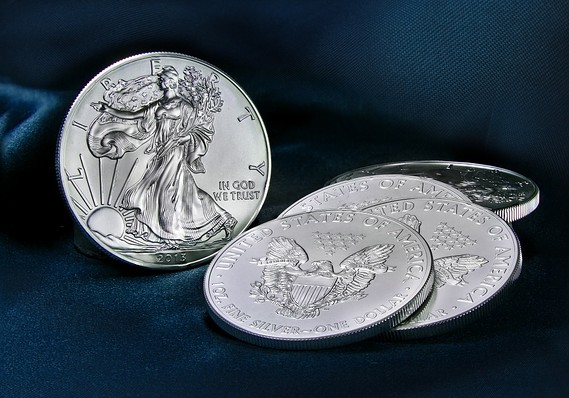
MW-BH904_am_sil_20130905133157_MGSilver bullion coins are so scarce that certain countries have set limits on the amount they distribute, but prices for the metal haven’t budged much from their recent six-year low.

Silver is experiencing an “unprecedented industry-wide phenomenon,” with strong demand for the physical metal prompting mints in certain countries to put silver bullion coins on allocation, according to The Silver Institute. In recent history, allocations have only been put into practice occasionally by the U.S. Mint.

Silver prices have yet to catch up with the strong demand for physical silver. They settled at $15.84 an ounce Thursday, not far from their six-year low in late August near $14 an ounce on Comex.

“This is the kind of disconnect you often see before a reversal or breakout,” Sean Brodrick, an editor of the Oxford Resource Explorer, said in a recent article.

Weaker industrial demand for the metal on the back of a slowdown in the global economy is part of the reason prices have been reluctant to climb. Industrial fabrication accounted for 55.8% of physical demand in 2014, according to The Silver Institute, while coins and bars accounted for 18.4%.

“When Western speculative sentiment turns against the precious metals, the price of silver can be pressured ever lower, despite high physical demand,” said Brien Lundin, editor of Gold Newsletter. “And those lower prices, which don’t reflect the true market demand for physical silver, serve to create even greater physical demand.”

Rationing

The Royal Canadian Mint, Australia’s Perth Mint, the Austrian Mint and the British Royal Mint have all put their silver bullion coins on “allocation”—meaning that they are controlling the distribution of coins “due to bottlenecks in the manufacturing process,” according to a recent report from The Silver Institute.

The U.S. Mint has allocated around 1 million American Eagle silver bullion coins a week for the past three months, selling its maximum allocation every week, U.S. Mint spokesman Adam Stump said.

True, low prices can attract buyers, explaining the strong demand, but in July—before futures prices for silver hit a six-year low in late August—the U.S. Mint temporarily sold out of its American Eagle silver bullion coins.

It resumed sales later that month, setting limits on the number of coins available. This week, the U.S. Mint allocated 970,000 American Eagle silver bullion coins for distribution.

Data from the U.S. Mint shows that it sold roughly 14.3 million ounces of American Eagle coins in the third quarter. That’s the most in 29 years, according to Brodrick.

Year to date, it’s sold a total of roughly 38.8 million one-ounce silver bullion coins, compared with about 44 million for all of last year.

“As silver prices drop, total physical demand can soar, and this is why major national mints are now straining under the demand,” said Lundin. “There is very little silver currently available to meet physical demand…”

“Once investors realize how tight the market truly is, the price will begin to rise,” Lundin said.

http://www.marketwatch.com/story/silver-bullion-coins-are-scarce-but-prices-dont-show-it-2015-10-23

October 8, 2015

West Point Mint

May 19, 2015

Goldman Sachs: 20 Years Left of Mineable Gold.

Recent Goldman Sachs report reveals that some of the world’s rarest commodities are expected to become seriously scarce, with only two decades left of mineable gold and diamond reserves.

 The report was researched and written by Eugene King, Goldman Sachs’ European metals and mining analyst. His report “shows that there are only 20 years of known mineable reserves of gold and diamond.” In addition to those gold and diamond reserves, platinum, copper, and nickel reserves are also estimated to have about 40 years left.
Gold bars

“The combination of very low concentrations of metals in the Earth’s crust, and very few high-quality deposits, means some things are truly scarce.” He wrote in the report.

King notes that the intention behind the report was to highlight the areas of scarcity, and demonstrate how scarcity is the ultimate driver of value and investment.

“Perhaps unsurprisingly, these are the so-called precious metals (and diamonds), and that their value is derived from the fact they are rare.” He writes, “Gold has been used as a measure of wealth for more than 4,000 years, as the ancient Egyptians soon worked out that gold was not only shiny and heavy, but rare.”

He adds that the relative scarcity of the commodity, and “the market’s belief that new discoveries will be limited, is what drives the price of these super-rare commodities.”

King’s report falls in line with the forecast made last year, estimating that 2015 will be the year when gold production would reach its peak in the mining industry, a concept known as Peak Gold.

Last September, Coldcorp, a leading gold miner, forecast estimated that Peak Gold will be reached in 2015. “Whether it is this year or next year, I don’t think we will ever see the gold production reach these levels again,” Goldcorp CEO Chuck Jeannes told the Wall Street Journal. “There are just not that many new mines being found and developed.”

Peter Grant, an analyst for USAGOLD makes a similar estimation. Speaking to Marketwatch, he explained “Mining output has been fairly flat for years, but new discoveries of gold have been falling rapidly.”

“If we do reach peak gold in the new future,” He added. “One would logically expect this to be broadly supportive to the price of gold for years to come.”

May 15, 2015

Family Wins Back Cache of Rare Coins

  • (Associated Press)

    imgres

    Philadelphia

    A family was awarded the rights to 10 rare gold coins possibly worth $80 million or more on Friday after a U.S. appeals court overturned a jury verdict.

    U.S. Department of the Treasury officials insist the $20 Double Eagles were stolen from the U.S. Mint in Philadelphia before the 1933 series was melted down when the country went off the gold standard. They argued that Joan Langbord and her sons cannot lawfully own the coins, which she said she found in a family bank deposit box in 2003.

    Langbord’s father, jeweler Israel Switt, had dealings with the Mint in the 1930s and was twice investigated over his coin holdings. A jury in 2012 sided with the government.

    However, the appeals court returned the coins to the Langbords because U.S. officials had not responded within a 90-day limit to the family’s seized-property claim, filed in about 2004.

    Family lawyer Barry Berke said: “Congress clearly intended for there to be limits on the government’s ability to seek forfeiture of citizens’ property, and today’s ruling reaffirms that those limits are real and won’t be excused when the government violates them.”

    Langbord, who’s in her mid-80s, worked in her father’s store on Jeweler’s Row for most of her life. Her sons, entertainment lawyer Roy Langbord, of New York City, and David Langbord, of Virginia Beach, Virginia, joined her in the legal fight.

    They do not plan to comment on the ruling and have not decided whether the coins will be sold, Berke said.

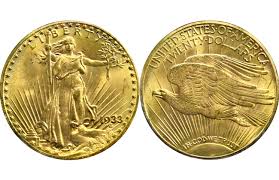
    Sculptor Augustus Saint-Gaudens designed the Double Eagle with a flying eagle on one side and a figure representing liberty on the other.

    One Double Eagle, once owned by King Farouk of Egypt, sold in 2002 for $7.6 million, then a record for a coin. Its later owner, a London coin dealer once jailed by the U.S. over it, split the proceeds with the U.S. in a deal brokered by Berke.

    The Langbords offered the government a similar split but were rebuffed.

    The family had taken the coins to the Secret Service in Philadelphia to have them examined, Berke said.

    “They authenticated the coins and said, ‘Thank you very much. We will now be keeping them,'” he said.

    The Mint struck nearly a half-million of the Double Eagles in Philadelphia in 1933 but never released them. They were melted into gold bars after President Franklin D. Roosevelt abandoned the gold standard.

    While prosecutors argued to jurors in 2011 that Switt must have stolen the coins with help from a Mint insider, Berke said he could have traded his scrap gold for them.

    A Treasury spokeswoman had no immediate comment on Friday’s ruling.

    Switt admitted to the Secret Service in 1944 that he had possessed and sold a set of nine other Double Eagles, which were recovered and destroyed. The surviving Farouk coin is believed to have been a 10th coin from that batch.

    The Mint sent a pair of 1933 Double Eagles to the Smithsonian Institution for its U.S. coin collection.

April 20, 2015

Millions Of Dollars In World War II Silver Recovered From Deep Ocean

(CNN)

It took more than seven decades, but England finally got its delivery of tons of silver coins.

For most of those years, the money was deep at the bottom of the Atlantic, the monetary casualty of a cruel World War II sinking

.salvage_5_3267613b

In November 1942, the unguarded SS City of Cairo was sunk by a German U-boat while carrying 296 civilians and cargo that included 100 tons of silver.

The vessel sunk to more than 16,800 feet under the surface (5,150 meters) where it went undiscovered until 2011 when Deep Ocean Search decided to go looking for it.

The sinking was the stuff of legend. The City of Cairo was bringing silver rupees from India to England as part of the war effort. After a stop in Brazil, two torpedos sank the ship in the Atlantic.

After the ship went under, the U-boat reportedly surfaced and the captain said to the survivors in lifeboats: “Goodnight, sorry for sinking you.” The captain’s lament is the title of a book about the event.

Only a handful of people died as the ship sank but about 100 more passed away during the desperate attempt of the six boats to make it to land, which was hundreds of miles away.

When the last of the lifeboats was found 51 days later, all but two people in it had died.

Deep Ocean Search said in a news release that during the 2011 search it located an unnatural object on radar. A sub found the City of Cairo split into two parts, buried by silt.

“Under contract to the UK Ministry of Transport, DOS recovered several tens of tons of silver coins from a depth of (5,150 meters),” the company said. The depth is a world record, the company claimed.

Other deep-water operations reported in the media that are close to this depth include the 1987 search for the wreck of a South African Airways plane at 16,000 feet (4,700 meters) and the discovery of the SS Gairsoppa at about 15,400 feet (4,800 meters) in the North Atlantic in 2011.

The BBC reported the City of Cairo salvage operation was completed in September 2013, but the British government made the company keep it secret until this week.

The coins were melted and the silver sold, the BBC reported. Deep Ocean Search got a percentage of the sale, and the UK Treasury the rest, according to the BBC.

At today’s rates, 100 tons of silver would be worth about $50 million.

http://www.cnn.com/2015/04/15/europe/world-war-ii-shipwreck-silver-recovered/

April 14, 2015

The Fall and Decline of “Crust”

(Excerpt from Doug Winter’s “Gold Coins of the Charlotte Mint”)

I am a fan of original surfaces on gold coins.  To my eyes, there is nothing more attractive than a Charlotte piece with layers of old “crust.”  (I define “crust” as original toning over a heavy layer of natural “skin” on a coin’s surface which develops over the course of time).  To me, originality provides great eye appeal.  Unfortunately, the grading services have unwittingly contributed to the destruction of a great number of gold coins by penalizing them for originality.  It is my experience that if you submit a “crusty,” original AU-50 coin, it is invariably graded EF-45.  But, if you take the same coin, scrub off the crust and make it bright, it will grade AU-50 to AU-55.  Ironically, the financial incentive for submitters is to destroy their coins in order to maximize their value.  This is especially true in a market such as Charlotte gold where the difference between an EF-45 and an AU-50 can be thousands of dollars.  As time passes, I think the number of truly original Charlotte coins will continue to shrink.  The few remaining coins with original surfaces will invariably trade for strong premiums among knowledgeable buyers and unwitting new collectors and investors will get stuck with the overgraded, unnaturally bright dregs.

March 17, 2015

Coin Grading 101

How United States Coins are Graded

The condition or state of wear of a coin, termed its “grade,” is one of the main determining factors of a coin’s value. Learning how to grade coins is essential for making sensible decisions whether buying, selling, or investing.

The History of Coin Grading Systems

In the early days of coin collecting, grading of coins was by “instinct.” Dealers had different grading systems based on their individual experiences, observations, and opinions. There was very little standardization.

Discussions on coin grading systems were held by the American Numismatic Association (A.N.A.) for decades, but it was not until the 1970’s that definite steps were taken to compile a book of universal grading standards. In 1978 the Official A.N.A. Grading Standards for United States Coins was first published, representing a consensus of professional numismatists’ grading systems.

In recent times, coin values have increased sharply. In many instances coins that were sold at $100.00 twenty years ago command prices of $2,000.00 or more now. A very small difference in a coin’s grade can mean a very large difference in its price. The exact grade of a coin is more important now than ever before.

The Official A.N.A. Grading System for United States Coins

It is recommended that anyone considering an investment in rare coins should become familiar with the Official A.N.A. Grading System for United States Coins, outlined below. Descriptions of Uncirculated Grades are presented first, followed by a listing of Circulated Grades. Also included is a series of pictures illustrating a typical coin in the respective states of wear. The information provided herein is intended only as an introduction. A complete grading guide to each individual series of United States coins is detailed in the Official A.N.A. Grading Standards for United States Coins (pictured below).

Uncirculated Grades (Mint State)

MS-70 – The perfect coin. Has very attractive sharp strike and original luster of the highest quality for the date and mint. No contact marks are visible under magnification. There are absolutely no hairlines, scuff marks or defects. Attractive and outstanding eye appeal. Copper coins must be bright with full original color and luster.

MS-69 – Must have very attractive sharp strike and full original luster for the date and mint, with no more than two small non-detracting contact marks or flaws. No hairlines or scuff marks can be seen. Has exceptional eye appeal. Copper coins must be bright with full original color and luster.

MS-68 – Attractive sharp strike and full original luster for the date and mint, with no more than four light scattered contact marks or flaws. No hairlines or scuff marks show. Exceptional eye appeal. Copper coins must have lustrous original color.

MS-67 – Has full original luster and sharp strike for date and mint. May have three or four very small contact marks and one more noticeable but not detracting mark. On comparable coins, one or two small single hairlines may show under magnification, or one or two partially hidden scuff marks or flaws may be present. Eye appeal is exceptional. Copper coins must have lustrous original color.

MS-66 – Must have above average quality of strike and full original mint luster, with no more than two or three minor but noticeable contact marks. A few very light hairlines may show under magnification, or there may be one or two light scuff marks showing on frosted surfaces or in the field. The eye appeal must be above average and very pleasing for the date and mint. Copper coins display full original or lightly toned color as appropriate.

MS-65 – Shows an attractive high quality of luster and strike for the date and mint. A few small scattered contact marks, or two larger marks may be present, and one or two small patches of hairlines may show under magnification. Noticeable light scuff marks may show on the high points of the design. Overall quality is above average and overall eye appeal is very pleasing. Copper coins have full luster with original or darkened color as appropriate.

MS-64 – Has at least average luster and strike for the type. Several small contact marks in groups, as well as one or two moderately heavy marks may be present. One or two mall patches of hairlines may show under low magnification. Noticeable light scuff marks or defects might be seen within the design or in the field. Attractive overall quality with a pleasing eye appeal. Copper coins may be slightly dull. Color should be appropriate.

MS-63 – Mint luster may be slightly impaired. Numerous small contact marks, and a few scattered heavy marks may be seen. Small hairlines are visible without magnification. Several detracting scuff marks or defects may be present throughout the design or in the fields. The general quality is about average, but overall the coin is rather attractive. Copper pieces may be darkened or dull. Color should be appropriate.

MS-62 – An impaired or dull luster may be evident. Clusters of small marks may be present throughout with a few large marks or nicks in prime focal areas. Hairlines may be very noticeable. Large unattractive scuff-marks might be seen on major features. The strike, rim and planchet quality may be noticeably below average. Overall eye-appeal is generally acceptable. Copper coins will show a diminished color and tone.

MS-61 – Mint luster may be diminished or noticeably impaired, and the surface has clusters of small contact marks throughout. Hairlines could be very noticeable. Scuff-marks may show as unattractive patches on large areas or major features. Small rim nicks, striking or planchet defects may show, and the quality may be noticeably poor. Eye appeal is somewhat unattractive. Copper pieces will be generally dull, dark and possibly spotted.

MS-60 – Unattractive, dull or washed out mint luster may mark this coin. There may be many large detracting contact marks, or damage spots, but absolutely no trace of wear. There could be a heavy concentration of hairlines, or unattractive large areas of scuff-marks. Rim nicks may be present, and eye appeal is very poor. Copper coins may be dark, dull and spotted.

Circulated Grades

AU-58 – (Very Choice About Uncirculated) – The barest trace of wear may be seen on one or more of the high points of the design. No major detracting contact marks will be present and the coin will have attractive eye appeal and nearly full luster, often with the appearance of a higher grade.

AU-55 – (Choice About Uncirculated) – Only small traces of wear are visible on the highest points of the coin.

AU-50 – (About Uncirculated) – With traces of wear on nearly all of the highest areas. At least half of the original mint luster is present.

EF-45 – (Choice Extremely Fine) – With light overall wear on the coin’s highest points. All design details are very sharp. Mint luster is usually seen only in protected areas of the coin’s surface.

EF-40 – (Extremely Fine) – With only slight wear but more extensive than the preceding, still with excellent overall sharpness. Traces of mint luster may still show.

VF-30 – (Choice Very Fine) – With light even wear on the surface; design details on the highest points lightly worn, but with all lettering and major features sharp.

VF-20 – (Very Fine) – As with VF-30 but with moderate wear on the higher surface features.

F-12 – (Fine) – Moderate to considerable even wear. Entire design is bold. All lettering, including the word “LIBERTY” (on coins with this feature on shield or headband), visible, but with some weakness.

VG-8 – (Very Good) – Well worn. Major designs visible, but with faintness in areas. Head of Liberty, wreath, and other major features visible in outline form without center detail.

G-4 – (Good) – Heavily worn. Major designs visible, but with faintness in areas. Head of Liberty, wreath, and other major features, as applicable, visible in outline form without center detail.

AG-3 – (About Good) – Very heavily worn with portions of the lettering, date, and legends being worn smooth. The date is barely readable.

The exact descriptions of circulated grades vary from one coin series to another, so the preceding commentary is of a general nature. It is essential to refer to the proper section of the Official A.N.A. Grading Standards for United States Coins text when grading any coin.

Nonstandard Grades and Terms

Although not recognized by the Official A.N.A. Grading System for United States Coins, intermediate grades such as AU-53, VF-35, VF-25, F-15 and G-6 are employed by some grading services and dealers. Also, some dealers use the abbreviation XF (instead of EF) to designate coins in Extra Fine condition. Additionally, three other nonstandard grades are sometimes applied to coins that grade below AG-3:

FR-2 – (Fair) – Extremely worn. Most of the coin’s surface may be smooth. The date may not be readable. Possibly exhibits slight to moderate damage.

P-1 – (Poor) – Hardly recognizable. May be damaged considerably.

B-0 – (Bad) – Unrecognizable and/or severely damaged and unable to be attributed.

The term PQ or “+” might also be included by a grader who believes that a coin is better than the minimum grade requirements, but does not satisfy the criteria for the next higher grade (for example, MS-63 PQ or MS-63+). A grade range may also be given (for example, VF-EF). In addition, the designation BU (Brilliant Uncirculated) is frequently used to describe uncirculated coins. Because of the absence of a numerical grade, this term is ambiguous at best. Often, coins that are offered as BU may in reality be AU (About Uncirculated) by strict definition.

A split grade may be assigned when there are significant differences in the obverse grade and reverse grade of the same coin. Split grades are normally denoted with a dual grade in obverse/reverse format. For example, a coin with a split grade of F/VF would have an obverse grading Fine (F) and a reverse grading Very Fine (VF). Typically, coins with a split grade are valued at the level of their lowest grade, whether obverse or reverse.

In addition to numerical grade, the market value of a coin is determined by several other factors. Some of these are: quality of strike, brilliance or toning, centering, planchet quality, aesthetic appeal, and supply vs. demand. Collectors and investors are also encouraged to seek one or more second opinions from a professional before purchasing a coin with a high market price.

Recommended Reading

Official A.N.A. Grading Standards for United States Coins. Ed. Ken Bressett and A. Kosoff. 4th ed. N.p.: Whitman, 1991.
Ruddy, James F. Photograde. N.p.: Bowers and Merena Galleries, 1991.

January 6, 2015

1795 Samuel Adams & Paul Revere Time Capsule Unearthed

Boston, MA — On Tuesday, January 6, 2015, at 6:00 PM, the Commonwealth of Massachusetts and Museum of Fine Arts, Boston (MFA), will hold a press conference to open the time capsule recently removed from the cornerstone of the State House, revealing its contents for the first time since 1855. One of the oldest in the country, the time capsule was originally placed under the State House cornerstone in 1795 by Governor Samuel Adams, Paul Revere and William Scollay. It was previously unearthed in 1855, when the contents were documented and cleaned. At that time, additional materials were added to the capsule, which was then placed in a brass container and returned to the State House, where it was plastered into the underside of a massive granite cornerstone.
Screen_Shot_2014-12-23_at_9.02.34_PM
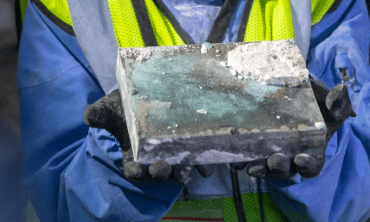
On Thursday, December 11, 2014, the Commonwealth of Massachusetts Division of Capital Asset Management and Maintenance (DCAMM) and the Secretary of the Commonwealth William F. Galvin’s office oversaw the removal of the State House cornerstone, and the time capsule contained within. The removal was designed by the engineering firm Simpson Gumpertz & Heger and executed by Walsh Brothers Construction and their sub-contractors. Located inside a carved depression within the stone, the time capsule was encased in plaster along with miscellaneous coins––a custom of the time that symbolized good luck. Pam Hatchfield, the MFA’s Robert P. And Carol T. Henderson Head of Objects Conservation, removed the time capsule and coins in a process that took more than seven hours.

Following its excavation, the time capsule—weighing 10 pounds andmeasuring 5-1/2 x 7-1/2 x 1-1/2 inches—was x-rayed at the MFA on December 14, 2014. X-rays revealed what is believed to be a collection of silver and copper coins (dating from 1652 and 1855); an engraved silver plate; a copper medal depicting George Washington; newspapers; the seal of the Commowealth; cards; and a title page from the Massachusetts Colony Records. These objects were described in the 1855 account of the reburying ceremony.

http://www.thebostoncalendar.com/events/unveiling-of-time-capsule-buried-by-sam-adams-and-paul-revere