November 4, 2013

Gold Coin Sales Up As Fears Take Hold

NEW YORK—U.S. Mint gold-coin sales are on track to exceed last year’s totals as worries about the stability of the federal government have attracted buyers back to the market.

The Mint has sold 752,500 troy ounces of American Eagle gold coins this year, just shy of last year’s total sales of 753,000 ounces, according to the Mint’s data.

The Mint sells gold and silver coins to authorized dealers, who in turn distribute the coins to the public. Dealers buy coins from the Mint to meet or in anticipation of demand from individual investors.

Coin sales got a boost in October, when the federal government was partly shut down for 16 days over a budget standoff in Congress and the U.S. neared the brink of a debt default. The Mint sold 48,500 ounces of American Eagle gold coins last month, more than triple the 13,000 ounces sold in September but less than the 59,000 ounces sold in October 2012.

“We saw our peak order volumes right before the government shutdown, and then again right before the deadline for the debt-ceiling increase,” said Mike Getlin, executive vice president at Merit Financial Inc., a bullion dealer based in Santa Monica, Calif. “The debates in Washington spooked people about holding dollars, and that drove up demand for bullion coins.”

Congress was able to resolve the budget standoff and temporarily raise the debt ceiling, but the debt debate is expected to resume early next year. Retail investors are also worried about the Federal Reserve’s continued stimulus efforts, and the long-term risks the program holds for the value of the dollar, he said.

But while demand for gold coins is climbing, investors are cutting back on their holdings of gold futures and other gold-linked financial instruments as they seek higher-yield investments, analysts said.

Gold prices are down 22% this year. Comex futures for November delivery closed at $1,313.10 an ounce on Friday, down 2.9% for the week.

Coin buyers tend to have a more long-term investment horizon, analysts said.

“People are just still very uncomfortable about the financial situation worldwide,” said Terry Hanlon, president of Addison, Texas-based Dillon Gage Metals, an authorized dealer for U.S. Mint gold, silver and platinum coins. “We still see very brisk sales when there are [price] drops in the gold market.”

October is also the month when many dealers restock their inventory, as the summer lull typically gives way to renewed interest, said Michael Haynes, chief executive at Oklahoma City-based Apmex Inc., one of 12 Mint-authorized purchasers of American Eagle silver coins.

“September sales picked up at the retail counter, but not a lot was bought from the Mint,” Mr. Haynes said, so dealers needed to buy more coins in October to replace what they sold.

Demand for silver coins has been even higher than for gold, in part because silver is less expensive. Silver for November delivery fell to $21.804 an ounce on Friday, down 3.6% for the week.

The Mint has struggled to keep up with silver-coin demand for much of 2013. It ran out of the coins in January and imposed limits on coin sales to its authorized dealers. Those limits remain in place.

The Mint sold 3.087 million ounces of American Eagle silver coins, up from 3.013 million in September but below October 2012 sales of 3.153 million ounces.

“We buy silver product every week, and we didn’t used to buy product from the Mint 52 weeks a year. The demand is there,” Mr. Hanlon said.

October 25, 2013

Price of Gold and Its Effect on Rare Coins

October 2, 2013

Rare Gold 1880 $4 Stella Sells for $2.75M at Auction

A gold coin known to collectors as one of the “white whales” in the coin collecting world was sold Monday for $2.75 million at Bonhams auction house in Los Angeles.

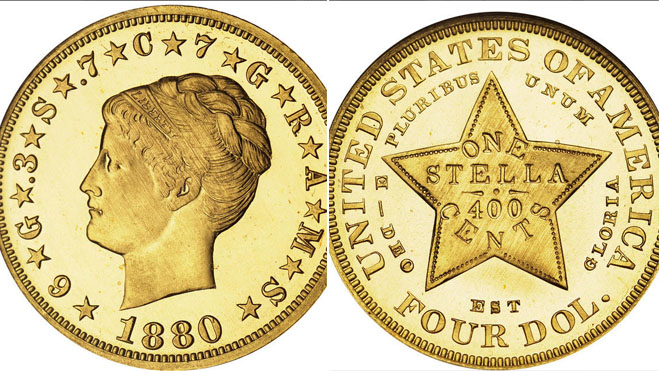
COINjpgThe 1880 $4 Coiled Hair Stella is six grams of pure gold and was never released in circulation. The coin was designed by famed United States Mint engraver George T. Morgan when there was a push in the United States for its own international coinage to enable easier trade with Europe. Congress rejected the initiative. But not before a handful were produced. The precise number minted has been lost, but it is widely believed that no more than 10 to 15 exist. This particular coin that was sold is considered to be the finest certified piece ever auctioned.

“They are so rare, they come on the market maybe once or twice, at most, every decade…That particular gold coin, there’s only 10 or 12 now, and most of these are in public institutions or private collections,” said Paul Song, the director of rare coins at Bonhams.

Placing its rarity aside, the coin was graded Cameo PF-67 by Numismatic Guaranty Corporation, which is the top rating given.

The sale of the 1880 Coiled Hair Stella from the “Tacasyl Collection of Magnificent United States Proof Gold Coins” exceeded early estimates by 66.6 percent and places the coin among the top 10 most valuable U.S coins sold at auction.

In January, a 1794 silver dollar called The Flowing Hair Silver Dollar sold for a total of $17.2 million. That coin is known as the first U.S. dollar struck and the finest known, Reuters reported.

The Coiled Hair Stella, which is six grams of pure gold, features an image of Lady Liberty facing to her right with her hair coiled on the top of her head. One the back of the coin, an inscription reads, “ONE STELLA” and “400 CENTS.”

“The braided plait on top of Liberty’s head is delicately and intricately engraved, and the portrait of Liberty is fully modeled and has a distinct individual personality,” Scott reportedly said.

Among other sales from the Tacasyl Collection included an 1879 Coiled Hair Stella that fetched $1,041,300 and an 1855 Type 2 gold dollar that brought in $397,800.


September 4, 2013

SS Republic Shipwreck, Civil War Gold Coins

excerpt

In the summer of 2003, by combining extensive research and 21st century technology, a team of experts from Odyssey Marine Exploration located the long lost S.S. Republic Ship and began the delicate job of documenting the historic underwater site, preserving its archaeological artifacts, and recovering a lost fortune. It is a fascinating tale of enterprising entrepreneurs and the buoyancy of the American spirit.

August 29, 2013

First Public Appearance of 1921 Proof Saint Gaudens Double Eagle

Proof 1921 Double Eagle

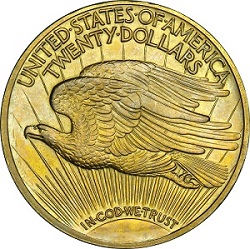
The Chicago ANA convention was the first public appearance in the Midwest of the 1921 Roman Finish proof1921 Saint-Gaudens Double Eagle.

1921 O
The existence of any 1921-dated proof Double Eagle was not known until 2000 when a coin formerly
belonging  to Raymond T. Baker was authenticated.  Baker was Mint Director in 1921.  A second proof example in much better condition was discovered in 2006 and was displayed that year at the Boston ANA World’s Fair of Money.  It is one of the two known 1921 Roman Finish proof Saint-Gaudens Double Eagle gold coins, graded NGC PF64+ CAC.

1921 R
“I knew instantly it was a proof the first time I saw it,” said John Albanese, CAC Founder who said he offered more than a million dollars for it the first time he saw it before it was certified by NGC.

“Since 1978 I’ve viewed several hundred thousand Mint State Saints and perhaps a hundred proofs.  This one doesn’t look like any of the Mint State coins, but does have the look, ‘texture and fabric’ just like the proofs I’ve seen.  This was a no brainer,” he explained.

Numismatic Guaranty Corporation Chairman Mark Salzberg stated: “The 1921 proof ranks highly among the truly important recent numismatic discoveries. For the $20 Saint-Gaudens series, in particular, it is earth shattering to encounter a coin like this for the first time outside of a museum or marquis collection. This is world-class numismatic treasure and everyone should take a few minutes to see it for themselves in its NGC holder.”

August 1, 2013

Why I Spent $3,100,000 on A Rare Coin

July 22, 2013

PCGS vs NGC vs ANACS vs IGC

JSilvestri

Have you ever wondered why some people say PCGS is better than NGC and so on.  One of the main reasons, is that PCGS tends to grade harder on coins is to keep  their numbers low on the population reports.  This gives the illusion that they are a better grading company because there are fewer coins graded at the higher levels.

This pattern is usually noticed in coins graded MS65 and above.  Why is this?  Well numbers wise, PCGS has 6-8% less graded coins in MS65 or above than NGC across the boards.  This gives the look of rairty to collectors.  Although there are many exceptions on an individual coin basis, the bottom line is what seems to matter to collectors.  It means that in buying a PCGS coin the quality is going to be higher because they are more strict in their grading specifications.

This is not always true.  Over a 4 month period I sent 10 of the same raw coins to the top 4 grading companies.  I varied the sending of the coins to these grading companies, but all 4 got to grade all 10.  PCGS coins came back : 4- MS65, 3-MS66 & 2-MS67.  ANACS coins came back 6-MS66 & 4 MS68.  NGC coins came back 1-MS66, 4-MS67 & 5-MS68.  IGC coins came back 8-MS67 & 2-MS68.

A lot of collectors are unsure about IGC, but let me say this, I have sent many coins thru them lately and they have been very consistent.  Also a lot of collectors complain that PCGS grades lower just to keep this elite image,and at the same time keep the value of the coins high for dealer premiums.  By not matching higher grades consistently, they keep the population of the higher graded coins lower, in turn keeping them rare.  In researching each company I found this:

ANACS – ESTABLISHED IN 1972

One of the top four grading companies.  Once owned by the ANA and the first third party service to authentic and grade coins.  In the early 1970’s the ANA Board of Governors recognized that something significant needed to be done about the counterfeit and altered coins that were plaguing the coin community.  Their solution was ANACS, the American Numismatic Association Certification Service.  ANACS began with a staff of two experts with Washington, D.C. as it’s home.

Washington was chosen in order to utilize the Smithsonian’s Numismatic Collection and to be near the Treasury Department, specifically the Secret Service.   ANACS certified its first coin as genuine on June 15, 1972.  In 1976, ANACS was moved to Colorado Springs where ANA had its headquarters.  Three years later, ANACS began grading coins using the technical grading standards that the ANA had established earlier with its book, “The Official American Numismatic Association Grading Standards for United States Coins”.

Holders are nice

Not as consistent with grading

Grades/slabs problem coins (net graded)

Attributes errors and varieties

Submission prices are reasonable

Submission are thru Authorized Dealers or Direct

Free Membership and access to Population Report

PCGS – ESTABLISHED IN 1985

One of the top four grading companies and the one most accepted for “sight unseen” trading.  PCGS is part of Collectors Universe, who’s primary owners/CEO’s are among the nations largest coin dealers.  In their “About Us” page they claim to have started the first third party grading system.  This is NOT TRUE because ANACS certified it’s first coin on June 15, 1972.  13 years earlier.

Nice Holders

Grading is pretty accurate

Does not grade problem coins

Attributes errors a varieties

Highest priced for submissions, especially on errors

Customer service is OK

Submissions are thru Authorized Dealers or Collectors Club Members

Collectors Club Membership starts a $49.95 per year

NGC ESTABLISHED IN 1987

One of the top four grading companies.  Some of the owners are also major dealers.

Nice holders

Grading is not always consistent

Submission prices reasonable

Does not grade problem coins

Attributes errors and varieties

Submissions are thru Authorized Dealers, Collector Club Members or ANA Members

Collectors Club Membership – $99.00 per year

ICG – ESTABLISHED IN 1987

One of the top four grading companies.  Owners/graders do not buy, sell or trade in coins.  ICG owners and employees are not allowed to buy or sell coins.  If caught they lose their jobs and any stock the hold in the company!  Most importantly, ICG offers expert, consistent grading by some of the most respected names in the business.  ICG also has the INTERCEPT insert ring, the only company with this product.  They tend to be tough on gold and easier on modern proofs.

Great holders

Grading is accurate and consistent

Does not grade problem coins

Attributes errors and varieties

Certifies and grades Ancient coins

Customer service is fast and friendly

Unbiased grading.  No possibility of bias because all coins are submitted to ICG through a third party receiving company.  This guarantees no conflict of interest – ever!

Submissions are through Authorized Dealers or the Collectors Club Alliance.

Collectors Club Membership Fee is $15.00 which is credited towards your first order, plus 5 free coin grades when you submit 5 other coins at ICG regular 15 day service.

May 22, 2013

Will Numismatic Coins Hold Their Value With the Drop in Gold Prices?

April 16, 2013

Once-Maligned Coin Nears Its Big Payday

NICKEL2span-articleLarge

New York Times

By MATTHEW HEALEY

Published: April 14, 2013   http://www.nytimes.com/2013/04/15/us/1913-liberty-head-nickel-is-expected-to-fetch-millions.html?pagewanted=all&_r=0

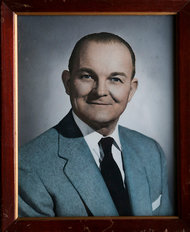
On the rainy night of March 9, 1962, a head-on car crash scattered a quarter-million dollars’ worth of coins across a North Carolina highway,
and the life story of a solitary collector named George O. Walton came to an end. But another story began — one of expert blunders, abiding
family loyalty and long-awaited redemption.

Lying on the wet asphalt that night, in a custom holder that Mr. Walton
had had made for it, was the object that connected those two stories: a 1913 Liberty head nickel, a coin that was never meant to be, with its own enduring tale as one of America’s greatest rarities.

The year after Mr. Walton died, his heirs were given shocking news: experts in New York had decreed the nickel a worthless fake. Mr. Walton’s sister put it away in her closet, but the family never lost faith in their Uncle George’s legacy.

On April 25, at an auction in Chicago, that loyalty is expected to be rewarded. Now recognized as authentic, Mr. Walton’s nickel is expected to fetch $2 million to $5 million.

Mr. Walton’s nephew, Ryan Givens, of Roanoke, Va., described his uncle as a bluntly forthright Southerner who was largely self-educated.

“He was not a bragger, but he enjoyed talking to people about his coins. He liked matching wits with others and trading,” said Mr. Givens, who last saw his uncle at a family gathering a few weeks before the car crash. Though intensely private, Mr. Walton was “good at finding things,” learned quickly from mistakes and enjoyed the camaraderie of his fellow collectors.

Mr. Walton had an odd knack for collecting coins.

His grandfather had encouraged him to collect the nickels he earned tending horses. As a teenager, Mr. Walton bet a group of schoolmates a coonskin against their gold dollar that he could beat them in wrestling. He won, and his appetite for gold was whetted.

Later on, his prized possessions included a set of early gold coins minted in the Carolinas by the Bechtlers, a family of 19th century metallurgists.

According to Mr. Givens, his uncle was also an astute trader. In the mid-1940s, he swapped another collector $3,750 worth of collectible gold coins for the 1913 Liberty head nickel, which was already legendary.

Mr. Walton was never a rich man, but his work as an estate appraiser often allowed him to get first crack at collectibles. His collecting passion extended to stamps, books, jewelry, Civil War memorabilia and guns. He accumulated so many vintage firearms that he had to buy another house just to store them, Mr. Givens said, and would often use his collections as collateral for bank loans to acquire more.

Though he owned several houses, Mr. Walton lacked a fixed abode. “Nobody knew where he was at any given time,” Mr. Givens said.

Instead, Mr. Walton kept his coins in safe deposit boxes, lived mostly in hotels, and traveled about in his 1956 Ford station wagon, visiting favorite dealers and showing up at coin exhibits and weekend bourses. He was on his way to a collector event in Wilson, N.C., to show his famous nickel on the night he died.       NICKEL-3-articleInline
The nickel’s story began in 1912. That year, United States five-cent pieces with a Roman numeral V and a woman’s head representing Liberty (she gave the coin its name) went out of production. In early 1913, that coin was replaced by a new design with an American Indian on the obverse, or front, and a buffalo on the reverse.

Controversy began in 1920, when Samuel Brown, a coin dealer, stepped forward with an anomaly: five nickels of the old V design, yet clearly dated 1913. Though he was evasive about their provenance, Mr. Brown sold all five nickels and they wound up together in the hands of Col. Edward H. R. Green, a famous collector with an insatiable appetite for all things unusual.

After Colonel Green died, a young collector named Eric P. Newman teamed up with a dealer in 1941 to buy many of Colonel Green’s coins, including the five 1913 Liberty head nickels. In an e-mail, Mr. Newman said that later that same year, he resold the coin that would eventually come into Mr. Walton’s collection.

Besides Mr. Walton’s heirs, “I believe that I am the only survivor of its various owners,” wrote Mr. Newman, now 101. “I am so lucky to have lived so long.”

It was Mr. Newman’s research that led to the discovery that Mr. Brown had been a mint employee in 1913, and might have illicitly produced the instant rarities himself. Mint records show no such coin was ever officially made.

Two of the five nickels are now in museums, leaving only Mr. Walton’s and two others in the hands of collectors.

After Mr. Walton died, his coins were auctioned in New York for $850,000 — a record sum for a coin collection in 1963.

“He had a major collection with great rarities,” said Douglas Mudd, curator of the American Numismatic Association’s Money Museum in Colorado Springs.

But in a stunning twist, the auction house rejected Mr. Walton’s nickel and sent it back to the family marked “no value.”

“For years, everybody scoffed at Walton because his nickel was called a fake,” said Mark Borckardt, a senior numismatic cataloger with Heritage Auctions in Dallas, which is selling the coin now. “They said he didn’t know what he was doing.”

Mr. Walton’s sister Melva, the mother of Mr. Givens, kept the nickel. “She thought a lot of Uncle George,” Mr. Givens said. “And 1913 was the year of her birth.”

After his mother died in 1992, Mr. Givens put the nickel in his bedside table. Meanwhile, numismatists wondered where the fifth nickel had gone.

Then in 2003, to promote a Baltimore coin event where the remaining four nickels would be shown together for the first time in 60 years, a group of coin mavens offered a reward for the missing one: $10,000 just to see it, $1 million if it were authenticated and sold on the spot.

Until then, “nobody had thought to call the Walton heirs,” said David Hall, one of those involved. Mr. Hall is a founder of Professional Coin Grading Service, which issued a certificate of authenticity for the coin, labeling it Proof-63, close to the top of the numismatic scale of 1-70.

But a newspaper reporter in Roanoke had done some sleuthing and encouraged Mr. Givens to step forward. Mr. Givens brought the coin to the Baltimore event, where a group of top coin experts examined the nickel and reached a unanimous verdict.

“The second I saw it, I knew it was real,” Mr. Hall said.

If the authenticity of Mr. Walton’s nickel was so clear in 2003, how could experts 40 years earlier have been so wrong?

“Any one of us would have had the same opinion in 1963,” Mr. Borckardt said. A half-century ago, he said, numismatic know-how “was in its infancy.” And those who discredited the nickel then might have never seen another 1913 Liberty head.

Since its rehabilitation, the Walton nickel has been exhibited at the Money Museum and around the country. Mr. Givens said he enjoyed seeing people talk about the coin, and does not look forward to selling it.

“I dread it,” he said. “But I’m told it’s a good time to sell.” He has considered using the money to set up something in his uncle’s memory to benefit the hobby.

Mr. Borckardt, who has grown friendly with Mr. Givens and his siblings, summed up. “The rediscovery and authentication of the nickel validated the life of George Walton,” he said, “and that to them was more important than the money.”

April 10, 2013

Arizona Passes Law Making Gold And Silver Legal Tender

DailyMailNews April 9th

States are now rushing to push bills through allowing for gold and silver to be recognized as legal tender as politicians fear that the U.S. economy is going to collapse.
The push from states like Arizona, which passed through their House of Representatives on Monday allowing gold and silver to be considered legal tender, comes as conservatives fear that the Federal Reserve is running the country’s economy into a deep hole.

article-2306590-1935092B000005DC-564_634x418[1]
Lawmakers say the global economy is on the precipice of financial ruin and the U.S. dollar could soon be worth less than the paper used to make it.
These doomsayers are pushing forward legislation that would declare privately minted gold and silver coins legal tender, no different under state law than the U.S. dollar printed by the federal Department of Treasury.
Arizona is one of more than a dozen states to incorporate similar laws into their roster, as many conservatives are harboring a growing distrust in government-backed money.
‘This is the type of currency we have had over the history of mankind,’ Republican state Representative Steve Smith said of the Arizona law.

article-2306590-19350AD0000005DC-504_634x379[1]
In 2011, Utah became the first state in the country to legalize gold and silver coins as currency.
Lawmakers in Minnesota, North Carolina, Idaho, South Carolina, Colorado and other states have debated similar laws in recent years.
Many investors have invested their money in precious metals in recent years as a hedge against the declining value of the dollar. When the value of the dollar declines, gold prices rise.
Gold rose $12, nearly 1 per cent, to $1,604.60 per ounce on Monday with news of Europe’s bailout plan for cash-strapped Cyprus. Silver inched slightly higher, up 2.3 cents to $28.874 per ounce.
The dollar was up against the euro, the currency used by 17 European countries, as well as the Japanese yen and the Canadian dollar in February.
The Arizona bill, which advanced in a 4-2 vote by a House committee Monday, states that gold and silver should be legal currency not subject to tax or regulation as property.
The Republican-led Senate gave the bill its blessing in February in a 17-11 partisan vote.
Proponents of the switch to gold and silver argue paper money is too vulnerable to government manipulations.

When central banks boost the amount of currency in circulation to drive down interest rates, the value of that currency relative to others can decline.
Gold-backed money fell out of favor during World War I because the U.S. and many other countries needed to print more cash to pay for the war.
In 1971, President Richard Nixon formally abandoned the gold standard. Now Republicans are pushing for it to come back as they do not trust President Obama and the economic policies put into place by Ben Bernanke during his time as the chairman of the federal reserve.